
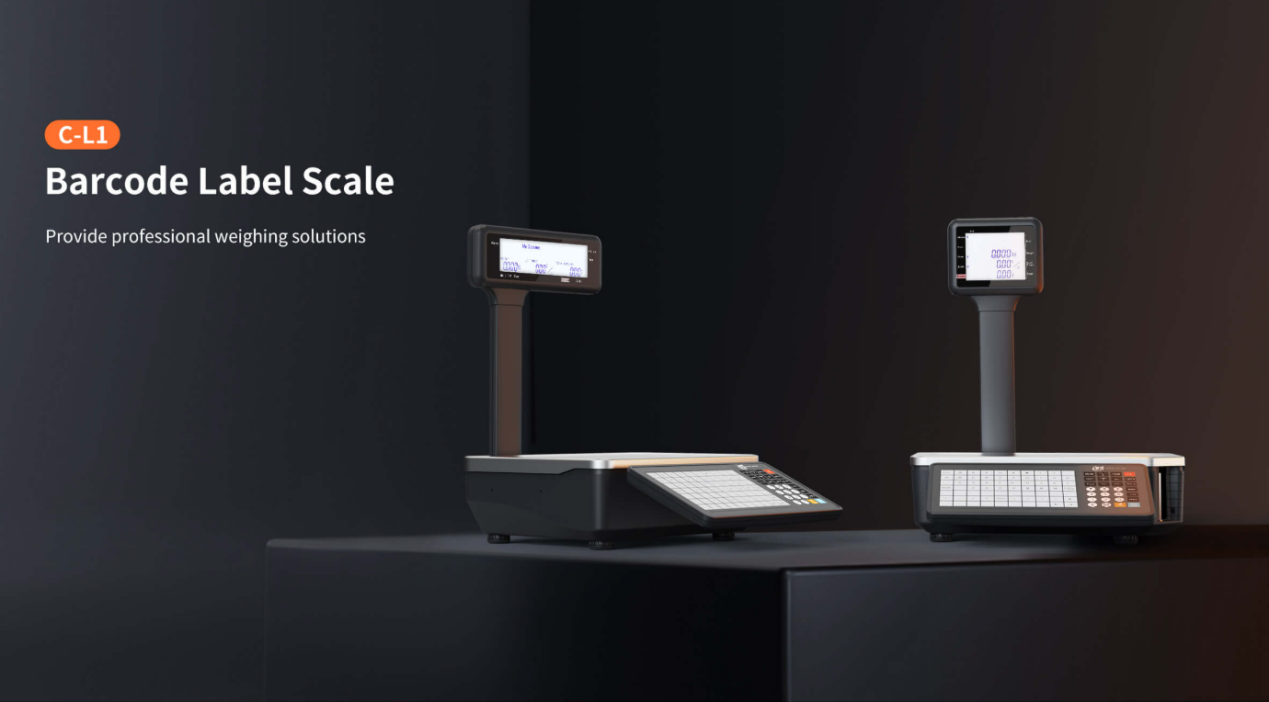
Quick answer: The HPRT C-L1 label printing scale is a strong fit for shops that want a keypad-based meat scale with label printer rather than a touchscreen or AI label scale. Its strongest points are fast item selection, integrated labeling, a sealed fanless housing, and practical connectivity. Buyers should still confirm POS compatibility and local commercial-weighing requirements before purchase.
A small butcher shop does not need a complicated weighing setup. Staff need to call up an item, weigh it, calculate the selling price, print the label, and move on.
The HPRT C-L1, engineered underHanin's smart retail brand, streamlines this workflow by combining precision weighing, price computing, and thermal label printing into a single, intuitive platform. Built for effortless daily operation and rugged commercial durability, it is a reliable label printing scale for butcher shops, delis, meat counters, and fresh-food retailers.
What Should a Small Butcher Shop Look for in a Meat Scale With a Label Printer?
A small butcher shop needs more than accurate scale readings. At a busy meat counter, the digital meat weighing scale should help keep the workflow moving—letting staff call up items quickly, calculate selling prices, print clear labels, and handle daily exposure to moisture, grease, food residue, and frequent cleaning.
These are the buying criteria worth checking first:
|
Key Buying Criterion |
Why It Matters at the Meat Counter |
|
Weighing & Price Computing |
Meat is sold by weight. The scale should calculate the selling price from the unit rate without adding extra manual steps at the counter. |
|
Barcode Label Printing |
Integrated thermal labeling can speed up checkout and support barcode-based workflows for both made-to-order and prepacked meat. |
|
Durability & Cleanability |
Meat counters deal with moisture, grease, food residue, and frequent cleaning. Housing design and food-contact surfaces matter in daily use. |
|
PLU & Fast Item Selection |
Staff repeatedly weigh the same core cuts of beef, pork, poultry, and lamb. Fast access to frequently sold items can save time during each transaction. |
|
Staff Efficiency & Usability |
During rush periods, clear controls and quick item selection are often more useful than navigating multiple menu layers. |
|
Connectivity & Compliance |
POS integration, barcode requirements, and local Weights & Measures rules should be checked before deployment. |
Is the C-L1 a Good Meat Scale With Label Printer for a Small Butcher Shop?
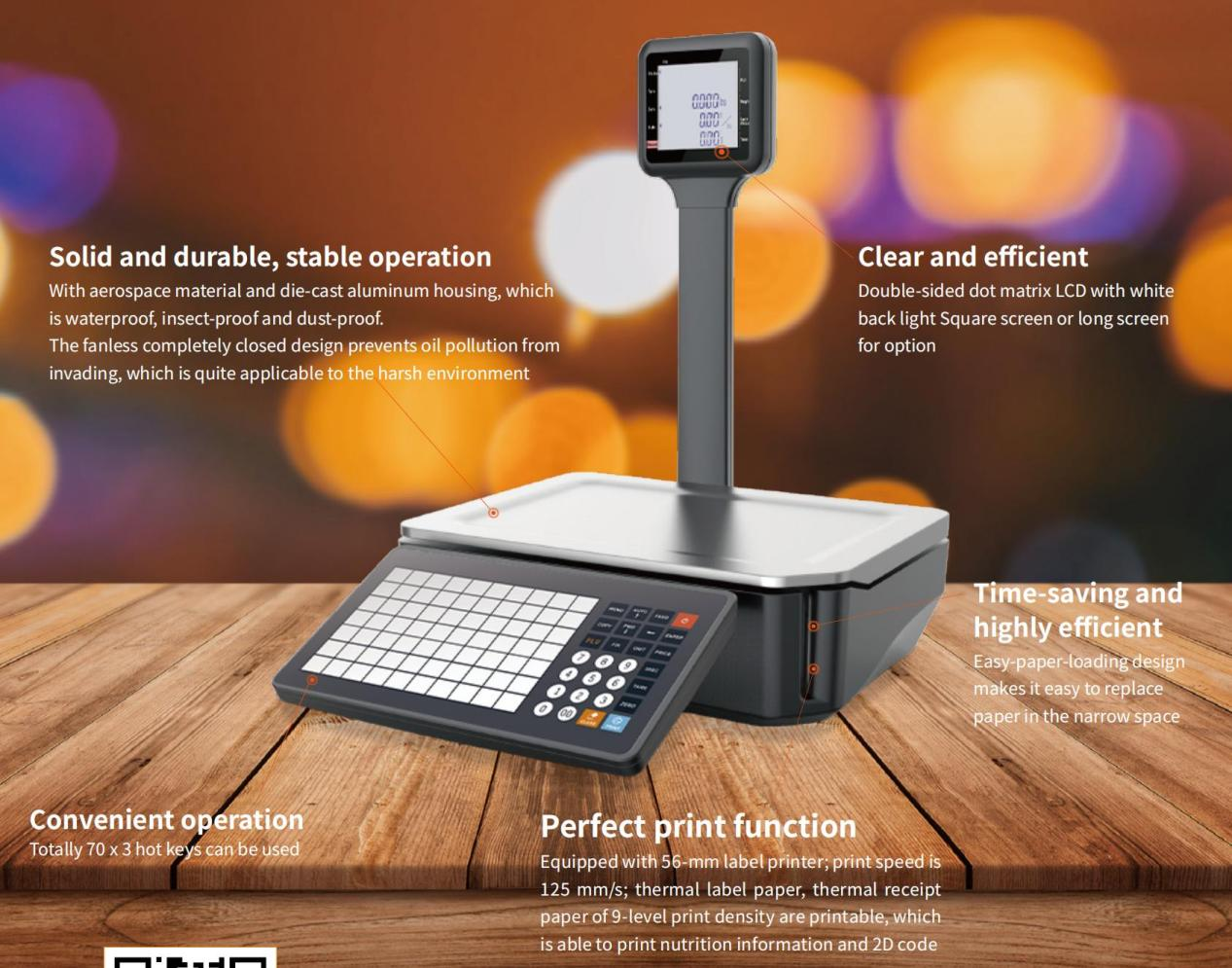
Yes, especially for shops that process repeat orders and prefer an all-in-one counter station. The C-L1 barcode retail scale is very affordable, stores up to 20,000 product records, and features 70 x 3 physical hotkey positions, allowing counter staff to map frequently sold cuts—like ribeye, ground beef, or pork chops—for one-touch selection.
Designed specifically for busy counters, the C-L1 features a dual-sided LCD that allows both staff and customers to verify item weight and price simultaneously. Its built-in 56 mm thermal printer reaches speeds up to 125 mm/s for quick customer turnover.
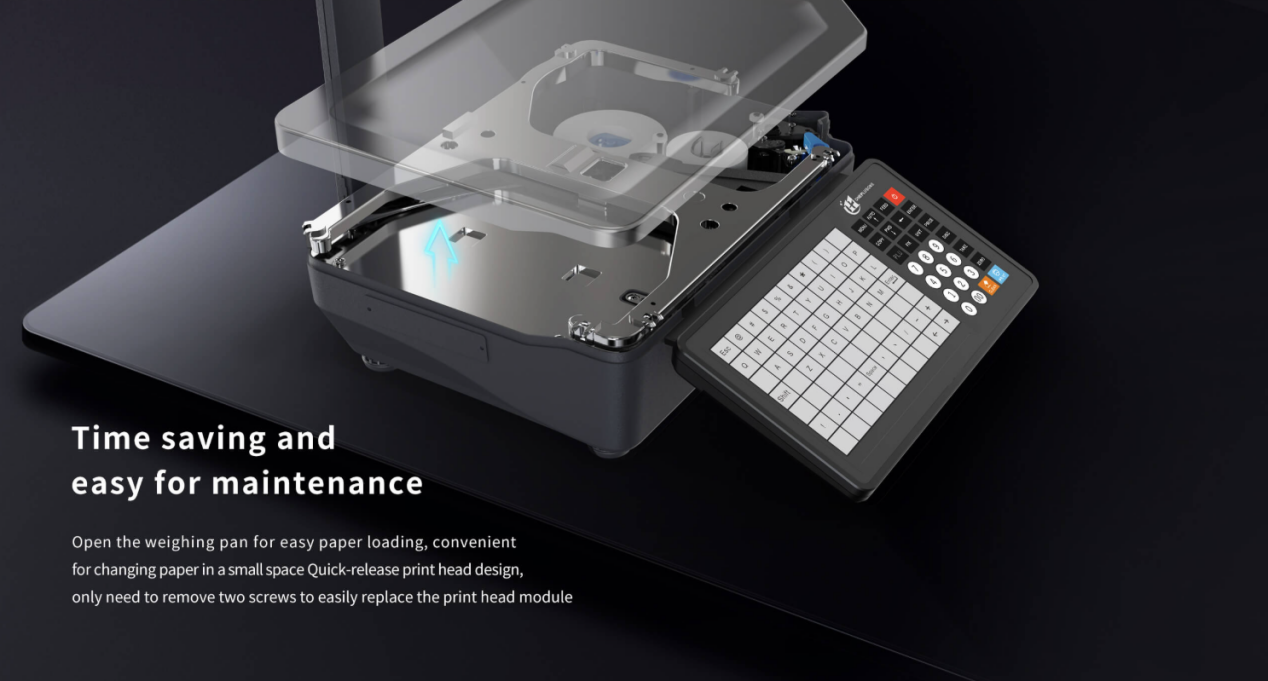
For tight workspaces, paper loading is hassle-free, and the printhead module removes with just two screws—a practical maintenance detail for equipment exposed to daily food residue.
How to print price labels for meat with the C-L1?
Watch the quick operation demo below:The workflow is direct: place the meat on the tray, press the assigned hotkey (or enter the PLU code), and the scale automatically calculates the total price and prints the barcode label.
For a lean butcher shop team, this unified system eliminates extra steps and minimizes customer wait times compared to operating separate scales and label printers.
Is the C-L1 Durable Enough for a Wet and Greasy Butcher Counter?
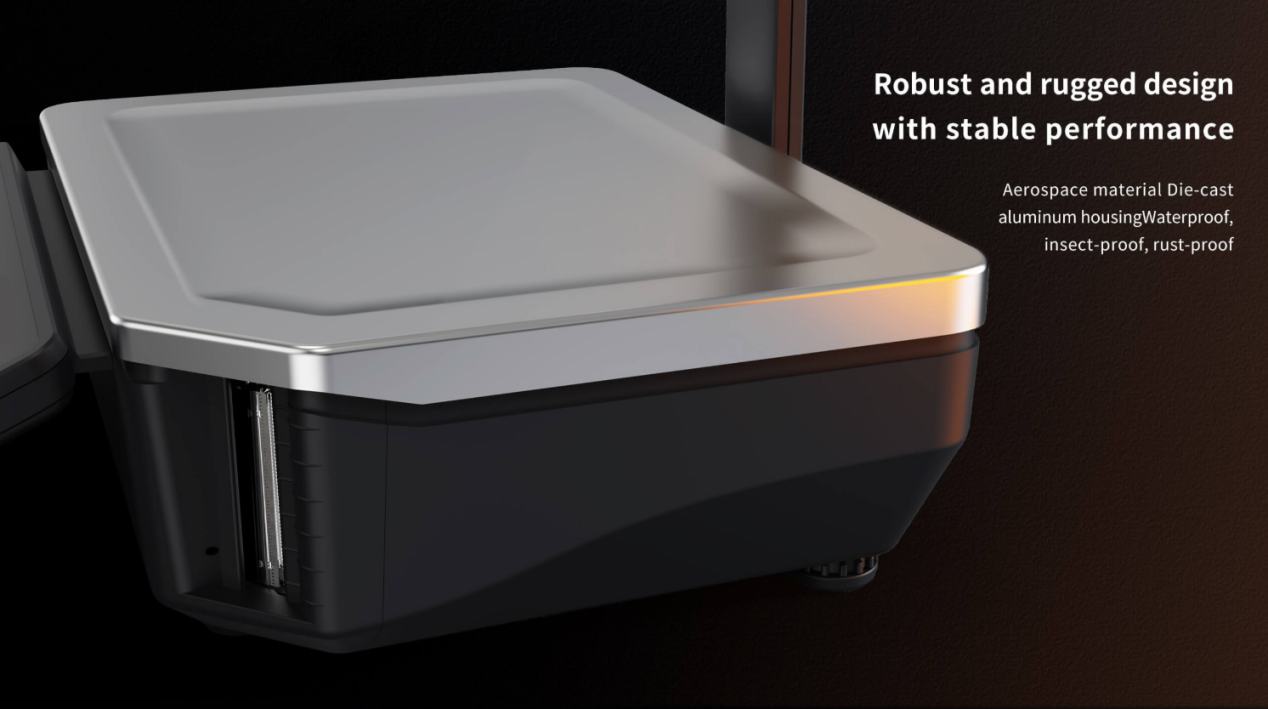
Yes, this is one of the C-L1's stronger points. This weighing scale with barcode printer uses a die-cast aluminum housing and a food-grade stainless-steel tray, giving it a more suitable build for fresh-food counters where moisture, grease, food residue, and frequent cleaning are part of daily operation.
At busy butcher shops, delis, and farm-direct meat stalls, equipment often gets splashed with water, grease, crumbs, and requires repeated wiping. For farmers selling fresh meat directly to local residents, counter equipment must also adapt to the unique environments of farm shops and packing rooms—requiring dust resistance and temperature tolerance.
The C-L1 addresses these environments with a fanless, fully closed design described as waterproof, dust-proof, insect-proof, and resistant to oil contamination. Without a cooling fan drawing airborne dust and residue into the housing, the design is far better suited to demanding fresh-food environments where daily food residue and frequent wipe-downs are unavoidable.
What Labels Can the C-L1 Print for Meat Products?
The C-L1 features a built-in 56 mm thermal label printer with 203 dpi resolution, supporting label sizes from 30 × 20 mm price tags to large 60 × 120 mm product labels.
It handles standard retail 1D barcodes for POS scanner checkout as well as 2D QR codes that can link farm-to-table customers to farm origin details, cooking recipes, or store promotions.
Whether you are packaging fresh cuts of beef, pork chops, lamb, poultry, or prepared deli meats, the C-L1 accommodates a complete range of label configurations:
• Essential Counter Price Tags: Product name, PLU code, net weight, unit price, total price, and tare weight for fast-turnover counter items.
• Compliance & Date Labels: Packed date, sell-by / use-by dates, lot numbers, and safe handling instructions required for fresh meat retail.
• Extended Information & Nutrition Labels: Full nutrition facts panels, ingredient lists, allergen warnings, and storage guidelines on larger label stock.
Can the C-L1 Connect to a POS or Store Management System?
The C-L1 meat scale with built-in label printer includes Ethernet and Serial interfaces, with Wi-Fi available as an option. That gives integrators several ways to connect the scale to a store network or checkout environment.
For integration projects, HPRT can also provide technical resources to support communication between the scale and retail software, including SDK documentation and protocol-level integration support where applicable.
Before deployment, integrators should verify the communication protocol, barcode data structure, PLU synchronization method, and POS workflow with the HPRT technical team.
What Do Real Butcher Shop Customers Say About the C-L1?
"Built like a tank—handles grease, moisture, and our weekend rush with zero fuss."
"We replaced two aging scales with the C-L1 at our main meat counter. The physical hotkeys are the biggest advantage for us—we mapped our most popular cuts, so staff can get to sirloin, ground beef, or pork chops quickly. The stainless tray and solid housing have also held up well to grease and daily cleaning, and the customer-facing display is useful while we package orders."
— Butcher shop owner, Europe
"The closed, fanless housing has worked well in our dusty farm shop, and the larger labels give us much more room for product information."
"We sell beef and pork through our farm store and CSA shares. We use larger labels for packed products, including nutrition information and 2D codes. Paper changes are straightforward, and the print quality has been consistent for the product labels we use."
— Farm shop owner, Europe
Who Is the C-L1 Ideal For (and Who Should Look Elsewhere)?
The C-L1 is ideal for:
✅️ Small to mid-sized butcher shops, delis, and farm shops that want a dedicated, physical-key scale for fast counter transactions.
✅️ Businesses working in moisture-, grease-, or dust-prone environments that can benefit from a closed, fanless enclosure.
✅️ Operators who prefer tactile hotkeys over touchscreen menus for frequently sold products.
Consider other options if:
• You require an AI camera scale for automatic product recognition without manual item lookup.
• A fully integrated, cloud-managed wireless POS ecosystem out of the box is a core requirement.
HPRT C-L1 Technical Snapshot
|
Specification |
Details |
|
Capacity Options |
3/6 kg, 6/15 kg, or 15/30 kg |
|
Minimum Capacity |
20 g, 40 g, or 100 g, depending on configuration |
|
Scale Division |
1/2 g, 2/5 g, or 5/10 g |
|
Commodity Storage |
Up to 20,000 records |
|
Display |
Double-sided dot-matrix LCD with white backlight; square or long screen options |
|
Print Resolution |
203 dpi |
|
Print Speed |
Up to 125 mm/s |
|
Print Width |
56 mm |
|
Print Length |
20–105 mm |
|
Label Size |
30 × 20 mm to 60 × 120 mm |
|
Media Type |
Thermal label paper |
|
Standard Interfaces |
Ethernet, Serial |
|
Optional Interface |
Wi-Fi |
|
Housing |
Die-cast aluminum housing |
|
Weighing Tray |
Food-grade stainless-steel tray |
|
Sensors |
Out-of-paper, gap, black mark, paper presentation, cover-opening, and cutter sensors |
|
Dimensions |
509 × 400 × 512 mm |
Find the Right Label Printing Scale for Your Meat Counter
For shops that value a simple, reliable weighing-and-labeling workflow over unnecessary complexity, the C-L1 is a serious option to consider.
Choose the capacity and connectivity that fit your operation, verify your POS and local compliance needs, and speak with our team about the right configuration for your counter.
FAQs About Meat Scales and Label Printing Scales
Q1: How many products can the C-L1 store?
It can store up to 20,000 product records and provides 70 × 3 physical hotkey positions for quick access to frequently used items.
Q2: How do I batch import product data into the C-L1?
You can batch transfer PLU product records via the companion management software over Ethernet or serial connection. Product information can also be entered manually on the scale's keypad.
Q3: What capacity options are available for the C-L1?
The C-L1 offers multiple capacity options including 3/6 kg, 6/15 kg, and 15/30 kg. Select the one that best matches the typical weight of products sold in your store. Minimum weighing capacity and scale division vary by configuration.
Q4: Is printhead maintenance difficult on the C-L1?
The printhead module can be removed with just two screws, making cleaning and replacement straightforward. Regularly wipe the printhead during daily maintenance to minimize buildup of meat residue and grease, ensuring long-term print clarity.